

Better construction starts with the BDI
The construction industry is changing rapidly. Projects are becoming increasingly complex. Space on construction sites is becoming more limited, and the industry needs to reduce nitrogen and CO₂ emissions, for example by reducing the number of transport movements. At the same time, there is a growing demand for predictable deliveries, better collaboration and more efficient ways of working.
With the Basic Data Infrastructure (BDI), clients, contractors, suppliers, transport companies and site managers can share data securely and in a standardised way, while each organisation retains ownership of its own information. This creates greater control over construction logistics, reduces the cost of failures and enables projects to be delivered more efficiently and sustainably.
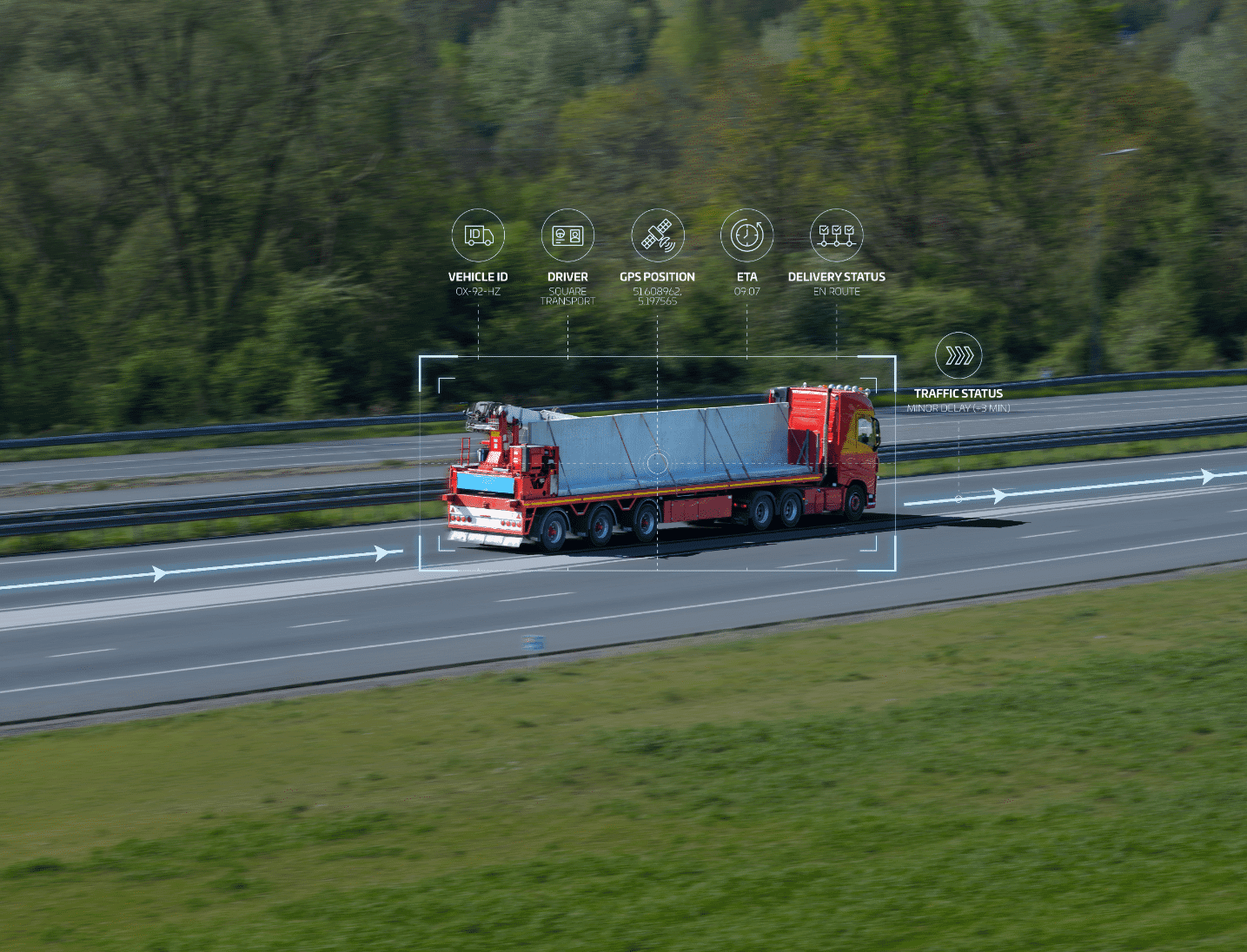
The challenge: gaining insight into schedules
In almost every construction project, different parties hold valuable information, such as expected arrival times of equipment and materials, available unloading areas, lifting capacity and safety requirements. However, this information is often spread across different organisations and systems. As a result, schedules do not always align, leading to waiting times and additional transport movements.
With the BDI, existing systems can work together securely. Based on a shared set of agreements, organisations only share the information that is necessary, and only with parties authorised to access it. For example, imagine a truck carrying precast concrete elements is delayed. Through the BDI, the updated arrival time is automatically shared with the parties that need this information. The construction site can then adjust the unloading location, crane and workforce accordingly, while another delivery can be assigned a different time slot if necessary. The result is a much more efficient and sustainable way of working.
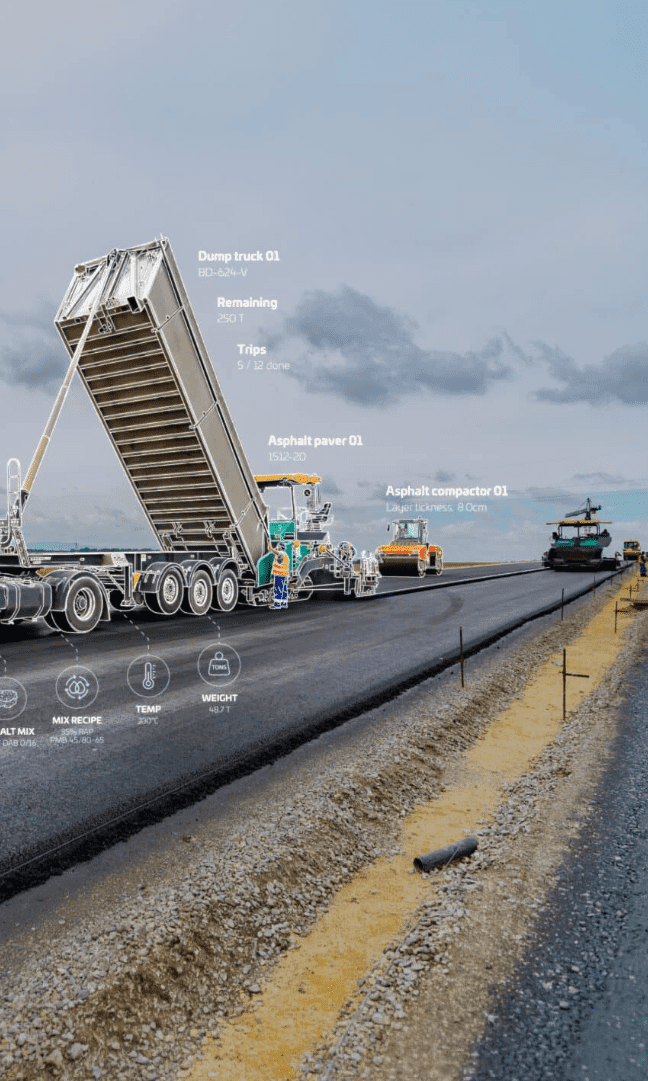
What does the BDI mean for asphalt logistics?
Challenges in asphalt logistics
- Deliveries do not always align with the current construction schedule.
- Materials arrive too early or too late at the construction site.
- Waiting times lead to additional costs and inefficient use of personnel and equipment.
- Coordination takes place through phone calls, emails and separate planning systems.
- Traffic congestion, emissions and disruption around construction sites are increasing.
- Organisations want to collaborate without sharing commercially sensitive information.
- Onboarding new suppliers and logistics partners is time-consuming.
The benefits of the BDI
- All parties involved work with the same up-to-date source data.
- Real-time visibility into deliveries, arrival times and schedule changes.
- Better coordination of deliveries, unloading capacity and equipment deployment.
- Automated and secure data exchange between supply chain partners.
- Smarter construction logistics with fewer transport movements and more efficient journey planning.
- Only trusted and authorised parties have access to relevant data.
- New parties can easily connect and operate according to the same digital rules.
Impact and reach in asphalt logistics
Fewer transport movements
By sharing up-to-date data on deliveries, time slots and construction site capacity, transport movements can be better coordinated, reducing unnecessary journeys, waiting times and emissions.
Collaboration across the entire construction supply chain
From clients and contractors to suppliers, transport companies and site managers: the BDI connects existing systems and makes reliable information available to every party that needs it.
One way of working, more partners
Thanks to standardisation, contractors, suppliers and transport companies can collaborate more easily, even when using different systems or working with new supply chain partners.
Use cases of the BDI



The benefits of the BDI
Efficient
- You always have one up-to-date version of the data
- You can respond to disruptions in the supply chain in time
- Flexibility to align with existing practices
Safe
- As the data owner you remain in control
- Independence from a single central authority
- The BDI operates according to high security standards
Trusted
- You can exchange data with confidence, even with parties you don't know
- Smaller organisations can easily connect
- Privacy is protected