

The technology behind the BDI
The BDI is designed to enable existing systems and applications to work together interoperably. To achieve this, it combines a common governance framework with technical concepts, components and APIs. This means organisations do not need to replace their entire existing IT landscape to become part of a BDI network.
The technology supports the BDI's core principles: keeping data at the source, maintaining control, managing access, enabling event-driven collaboration and ensuring verifiable digital trust.
From governance to technical implementation
The BDI does not prescribe which business applications organisations must use. Instead, the governance framework defines how systems collaborate across organisational boundaries.
Technical components translate these agreements into practice. They help identify organisations and the relationships between them, locate the right data source or service, and exchange information in a controlled way. This creates a federated network in which different systems can work together according to the same principles.
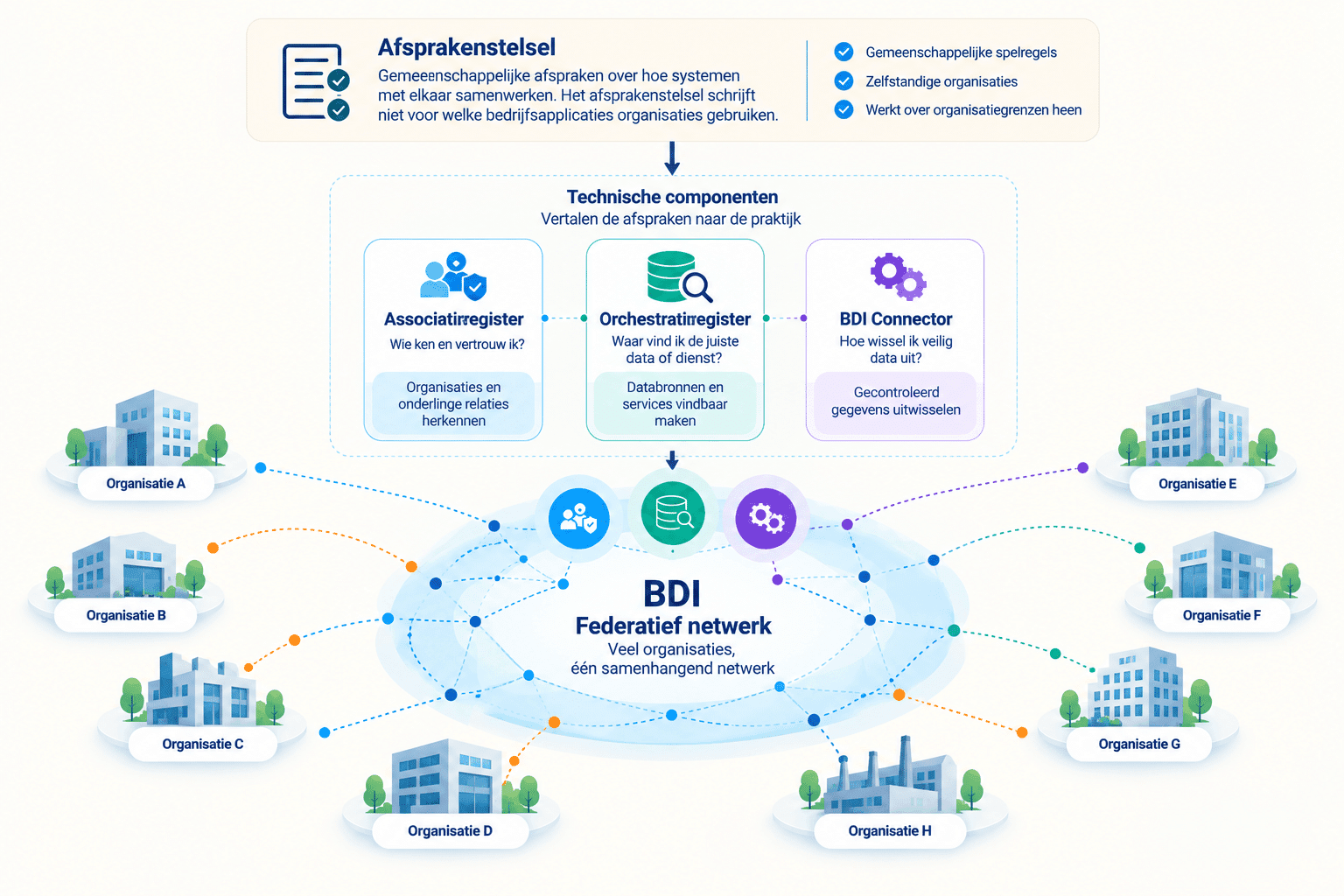
The BDI components
To make collaboration based on its core principles technically possible, the BDI comprises several components. Three of these play a particularly important role:
Connector
The connector links an organisation's own IT environment to the BDI network. It enables the secure exchange of notifications and data in accordance with BDI agreements, without requiring existing business applications to be completely modified.
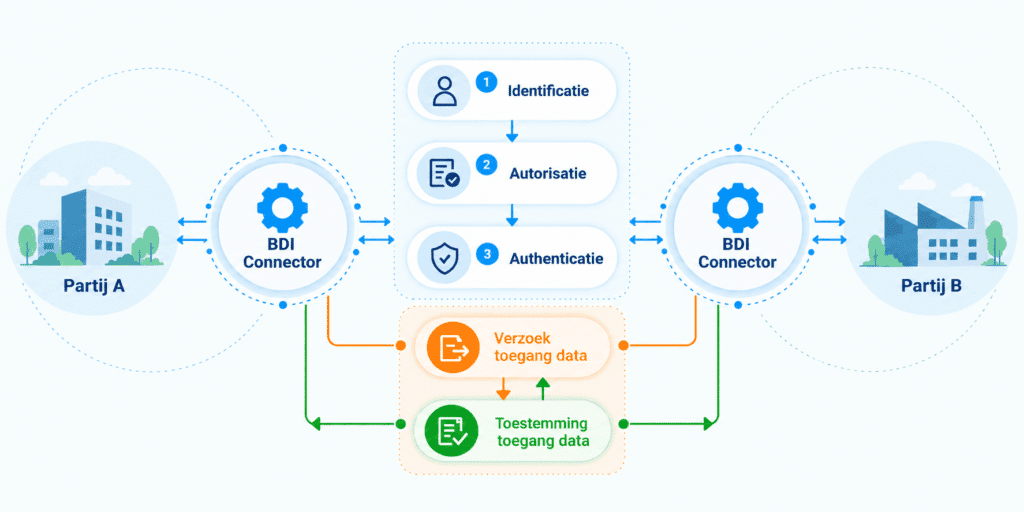
Association registry
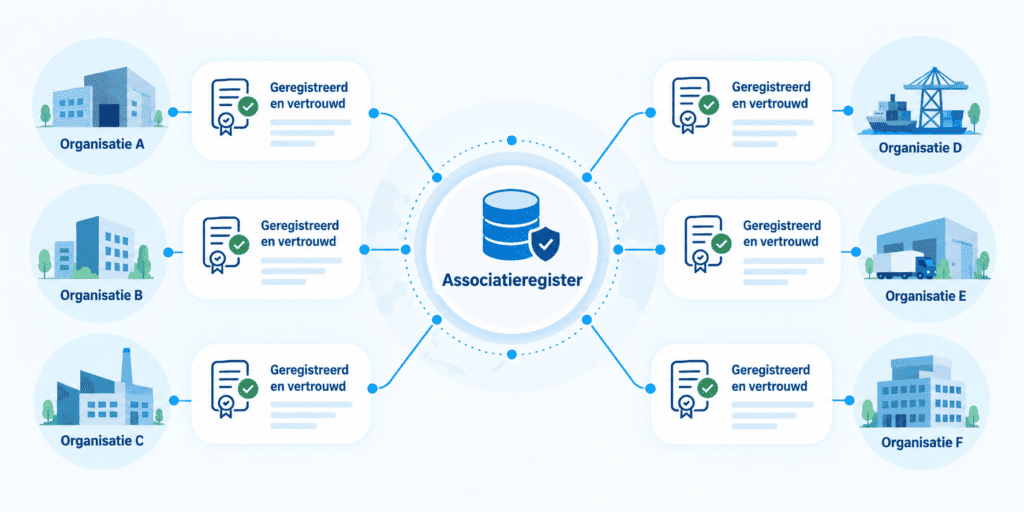
The association registry makes relevant relationships between organisations digitally visible. For example, it can record that a carrier is carrying out an assignment on behalf of a shipper. These relationships can be used to determine whether a party is authorised to receive specific information.
Orchestration registry
The orchestration registry helps participants locate the right services and data sources within the network. This enables a system to identify where the required information is available and how it can be accessed.
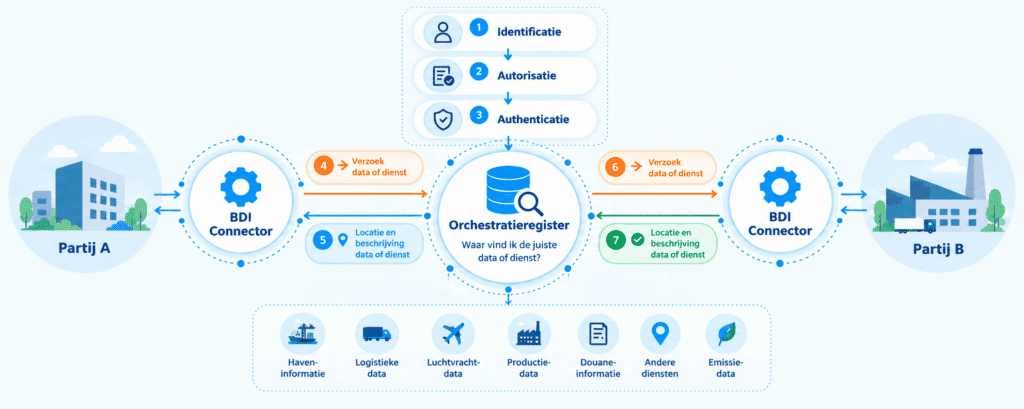
The strength lies in how these components work together. Together, they support the discovery of information, the verification of relationships and authorisations, and the secure exchange of data between organisations.
APIs connect existing systems
The BDI is designed to integrate with existing IT environments. Through APIs and standardised interfaces, ERP, TMS, WMS and other business applications can exchange data in accordance with BDI agreements.
This means organisations do not need to replace their entire IT landscape. The BDI provides an interoperable layer that allows both existing and new applications to become part of a wider data-sharing network.
For architects and developers
- (Opens in a new window)
Would you like to learn more about the technical architecture of the BDI or develop an application yourself? The technical documentation provides the architecture, specifications, APIs and information on implementing BDI components.
- (Opens in a new window)
Would you like to explore the technical principles first and learn how to apply them? The BDI Technical Fundamentals training covers these topics.