

Paving the way for smarter asphalt logistics
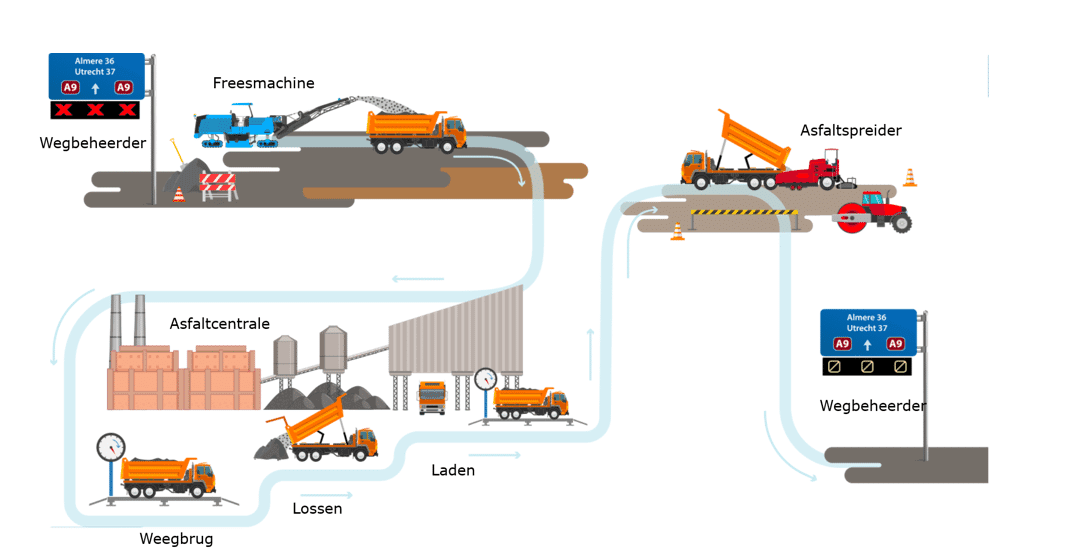
Construction logistics plays a crucial role in making the Dutch construction sector more sustainable. In recent years, the ‘Mobile Machinery & Construction Logistics’ programme run by Top Sector Logistics has made a significant contribution to this sustainability challenge, generating valuable insights into areas including emissions data. One of these insights is that there are smarter ways to transport asphalt to and from construction sites. This prompted the launch of the ‘Control of Asphalt Logistics’ Living Lab.
A range of challenges is driving a growing need for reliable, up-to-date data in asphalt logistics. In addition to sustainability, these include shortages of staff and transport capacity, distance-based road charging and increasingly stringent reporting requirements. Contractors and hauliers work with different partners from one project to the next. Each party has its own working methods, software systems and agreements, including arrangements for sharing information. This adds to the complexity of collaboration.
Taking control of asphalt logistics
How can parties work together efficiently? How can they gain control of logistics processes without creating additional administrative burdens? And how can they prevent valuable logistics information from remaining locked away in PDFs and Excel files or trapped in bespoke system integrations? These are the questions at the heart of the newly launched DIL Living Lab ‘Getting a Grip on Asphalt Logistics’.
Contractors including BAM and Heijmans, PIM-Infra, asphalt hauliers and IT service providers are working together to create a data ecosystem based on the Basic Data Infrastructure (BDI). Through this Living Lab project, they aim to gain greater insight into - and therefore greater control over - the efficiency of the asphalt logistics chain. The Dutch Association for Transport and Logistics (TLN) supports the initiative.
Greater insight and cost savings
The project is intended to give supply-chain partners access to the same up-to-date information on matters such as journeys, loads, arrival times and waiting times. This will allow them to coordinate their activities more effectively, reducing both waiting times and manual administrative work. It will also make it easier to monitor the performance and emissions of asphalt logistics operations. Using the BDI as the foundation for data exchange removes the need to create numerous costly point-to-point integrations. Over time, this will deliver significant savings on IT costs.
The Living Lab participants are using operational data from an ongoing asphalt project to identify where bottlenecks occur. They are also digitalising the logistics processes for hot and cold asphalt. Using the Open Trip Model, the parties record logistics data in a consistent format, enabling their software systems to exchange this information more easily.
Modernising the waste consignment note
The Stichting Uniforme Transport Code (SUTC) is being modernised under the direction of the Uniform Transport Code Foundation. This consignment note is mandatory when transporting waste materials. It includes details such as the origin and type of waste, the carrier and the destination.
The consignment note is an open digital standard that allows parties to exchange data directly between their systems. This removes the need to repeatedly enter the information manually and reduces the risk of errors.
Would you like more information about this or other Living Labs? Email richard.mulders@bdinetwork.org or ruud.arts@bdinetwork.org.